|








|
The
nene (Branta sandvicensis), or Hawaiian
goose, was proclaimed the ‘Official Bird of Hawai‘i
on May 7, 1957, and is an endangered species. It is
not known how many nene once inhabited the island
chain, but by the arrival of Captain James Cook nene
were found primarily in high elevation habitats. Several
factors led to the rapid decline of the nene,
including predation by alien species such as
feral dogs, cats, rats, and the mongoose. Hunting during breeding
season remained legal until 1907, and quickly diminished the
wild population. By the time it was realized that nene
were teetering on the brink of extinction it was estimated
only 30 - 50 geese remained in the wild. A captive propagation
program was begun, and in 1949 Big Island rancher Herbert
Shipman (who had maintained a small flock of captive nene
since 1918) loaned two pairs to the Territory of Hawai‘i
and a trio to the Wildfowl Trust in Slimbridge, England. Since
1960 more than 2,000 young have been reared and released into
the wild on four islands.
|
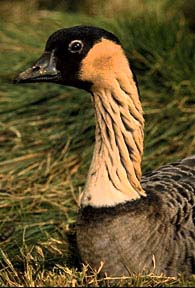
Photo: David Watersun ©1995
|
|
| |
|
|
| |
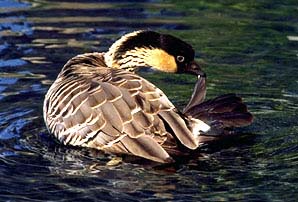
Photo: Arleone Dibben ©1995
|
Nene
are waterfowl and utilize water just as any other species
of geese or ducks, but the nene differs physically
from most other species of wild geese with a more upright
stance, a turned-down nail on the tip of the bill, reduced
webbing of the feet, and longer legs and wings. They range
in height from 21" to 26" and weigh about 2 kilos (4 1/2 pounds).
The legs and feet of nene are smoky black, and the body dark
brown to dark gray with cream-tipped feathers. Buff-colored
feathers form an unusual furrowed pattern along the entire
length of the neck. Males and females have identical plumage,
and the male is typically slightly larger. The call of a nene
is a resonant "honk" similar to other species of wild geese.
It is its almost constant moaning while feeding that is most
unusual… a low murmuring "nay-nay" made when its bill is closed.
|
|
| |
|
|
| |
Although
nene typically establish life-long monogamous
pairs, they will occasionally form trios consisting of one
male and two females, and following the death of a mate the
remaining nene will bond with a new partner.
Some pairs have also been known to 'divorce' and choose new
mates. Both sexes can reach reproductive maturity in their
first year, but females usually mate at two or three years
of age. The nene is the only goose species in
the Northern Hemisphere to nest during the winter months of
October through March. Nests are constructed on the ground,
and are excavated by their feet into shallow depressions concealed
under low shrubs. Clutch size is between 3 - 5 eggs, which
are 55 - 60 mm in width and 85 - 90 mm from end to end. Incubation
is solely by the female and takes 28 to 30 days. Males guard
the nest by perching on nearby shrubs, boulders or high ground.
At hatching, goslings weigh between 90 - 105 grams. Nene
goslings take flight, or fledge, at about 8 weeks of
age. The life span of wild nene may be 35 years
or more. The oldest recorded captive nene is
believed to have been 42 years old at the time of its death.
|
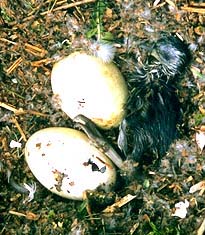
Photo: Dr. Helen Baker
©1995
|
|
| |
|
|
| |
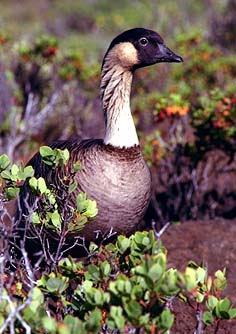
Photo: Arleone Dibben ©1995
Nene
are omnivores, eating primarily grasses, seeds, buds, flowers,
leaves, fruits and berries, but will also eat fish and insects
opportunistically. Nene feed mostly in the
early morning and late afternoon, and rest in the shade
throughout the day. Small flocks of nene will
consistently roost overnight in the same location, dispersing
after dawn to a daytime feeding ground, returning at dusk.
Nene
roosting at the W.H. Shipman estate congregate at dawn in
the coastal spring-fed ponds before departing for daytime
habitats.
|
Nene
are very social birds and parental care is prolonged. They
may travel in family groups for the first year, usually
dispersing when the parents nest again. Flocks will sometimes
form after the breeding season when the new goslings have
fledged.
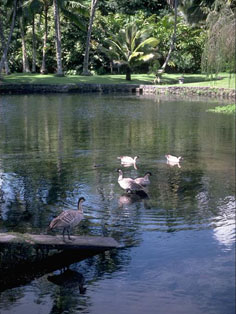
Ponds
at W.H.Shipman estate
Photo ©
Peter Shannon 1995
|
|
| |
|
|
| |
It
is speculated that the species once nested in coastal habitats
and migrated to seasonal food sources at various elevations
after goslings fledged. The results of a three-year gosling
mortality study by Dr. Helen Baker and Dr. Paul Baker placed
emphasis on the importance of a new approach for state officials
to begin lowland releases and in the mid-1990s nene
were freed in isolated coastal areas on Kaua‘i and
on the mid-elevation slopes of the West Maui Mountains.
Following the Baker's recommendations for lowland releases,
the nene population more than doubled within
a four year period. More recently, nene have
been released at a coastal pasture on the east end of Moloka‘i.
In 2010, the statewide population was estimated to be about
900 birds.
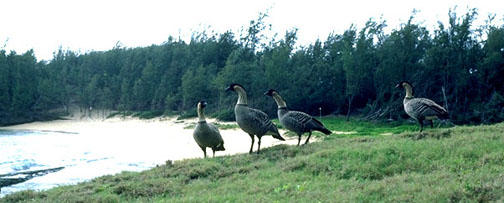
Photo: DLNR/DOFAW
©1995
Integrating
the nene into today’s altered lowland
habitats is critical for their survival.
You can help save this endangered species by keeping
them wild.
|
|
|